First-order planning
Bedding Set MOQ Guide for a First Wholesale Order
A useful MOQ discussion separates the order into the production inputs that create minimum quantities. Plan the assortment first, then ask the factory to confirm the minimum at each relevant level.
Direct answer
For a first wholesale bedding order, do not ask only for “the MOQ.” Send a quantity matrix by product, fabric, colour or print, size, set configuration and packaging version. The factory can then identify which minimum comes from material purchasing, production setup, individual SKU quantities or custom packing.
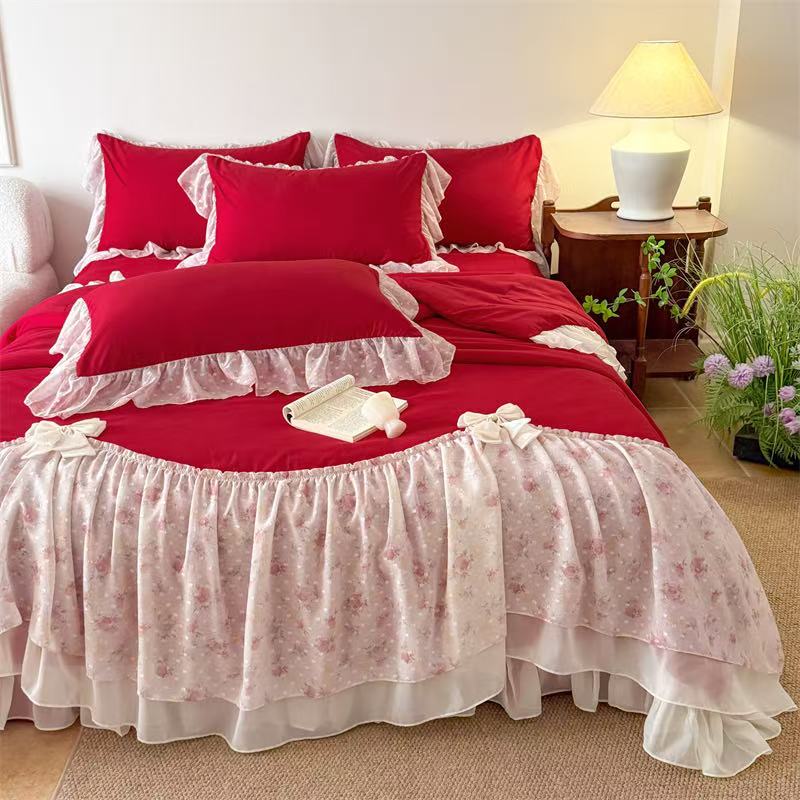
What does bedding MOQ apply to?
MOQ means minimum order quantity, but the unit behind that minimum can differ. One order may have a total-order minimum and additional minimums for a base fabric, dyed colour, printed design, size, finished SKU or custom package. A single headline number is incomplete unless it states what is being counted.
| MOQ level | What the buyer should define | Why it can create a minimum |
|---|---|---|
| Order | Total units and total order value | Production planning and commercial handling |
| Material | Base fabric, composition, construction and finish | Fabric purchasing, dyeing or printing preparation |
| Colour or design | Each solid colour, print or artwork version | Separate colour or print setup |
| Size or SKU | Quantity for every size and set configuration | Cutting, sewing, labels and inventory control |
| Packaging | Bag, box, insert, barcode and artwork version | Custom packaging and print setup |
Ask the supplier to mark each constraint directly on the quotation. Current availability and final minimums must be confirmed for the actual specification; they should not be inferred from a different style or an old quote. The broader MOQ, sampling and lead-time guide explains how these inputs connect to production planning.
Build a first-order quantity matrix
Use one row per sellable SKU. Include the style, fabric, colour or print, finished size, components per set, unit-pack version and planned units. Add totals by shared fabric and colour so the factory can see which rows may use the same production input.
| Field | Example of the required decision |
|---|---|
| Style | Duvet-cover set, fitted-sheet set or another exact configuration |
| Material | One agreed base fabric and construction |
| Colour or artwork | Named colour reference or approved print file |
| Size | Finished dimensions for every component |
| Set build | Component names and quantity per retail set |
| Packaging | Standard or custom unit pack, label and barcode version |
| Quantity | Units for this SKU plus totals by fabric and colour |
The set configuration guide helps define components, while the specification sheet covers the measurable product fields.
How can a buyer simplify a first order?
Reduce variation before reducing total quantity. A focused order is easier to review when several SKUs share the same base fabric, construction and packaging format. Limit colourways and sizes to the assortment the sales channel actually needs, then add variants after the first product, pack and demand assumptions have been tested.
- Use one base fabric across compatible sizes or sets.
- Start with fewer colours or printed designs.
- Keep the component configuration consistent where the market allows.
- Use standard packaging before introducing several custom artwork versions.
- Separate launch quantities from possible repeat-order quantities.
These choices do not guarantee that quantities can be combined. Ask the factory which variables share inputs and which require separate material, colour, production or packaging runs.
Ready stock, private label or custom OEM?
The sourcing route changes the MOQ discussion. Ready stock may support a smaller or faster test when available colours, sizes and packing are acceptable. Private-label changes can introduce label or packaging minimums. A custom OEM programme may add material, colour, print, construction and development constraints. Compare the routes against the same destination, assortment and launch plan rather than assuming one route is always lower.
Review ready stock versus OEM bedding and the OEM and ODM service workflow before choosing the route.
Questions to ask before accepting an MOQ
- Does the minimum apply to the whole order, each product, each fabric, each colour, each size or each SKU?
- Which quantities can be consolidated because they share material or production inputs?
- Do custom labels, inserts, bags or boxes have separate minimums?
- Will the quoted unit price change if the size or colour mix changes?
- What sample, artwork and specification approvals are required before bulk production?
- Which material or packaging balance, if any, remains after the first order?
- How does the final assortment affect production and shipment timing?
Record the answers in the quotation or order file. Use the quotation guide to align price inputs and the production timeline guide to plan approvals.
Bedding MOQ FAQ
Is bedding MOQ one number for the whole order?
Not necessarily. A factory may need to review minimum quantities by product, base fabric, colour or print, size, SKU and custom packaging. Ask which level controls each minimum.
How can a first-time buyer make a bedding MOQ easier to meet?
Reduce the number of variables: use one base fabric, fewer colourways, a focused size range, shared components and standard packaging where suitable. Ask the factory which quantities can be consolidated and which cannot.
What quantity information should be sent for a bedding quotation?
Send a matrix showing each style, colour, size, set configuration, packaging version and planned quantity, plus the total order quantity and destination market.
Send a quantity matrix for review
Share the product, fabric, colour, size, set configuration, packaging and planned quantity for each SKU.
Prepare an inquiry