Product buying guide
4 Piece Bedding Set Wholesale Buying Guide
“Four pieces” describes a count, not a complete purchase specification. Two sets with the same label can differ in components, finished sizes, fabric, closures, finish and packing. Make those differences explicit before comparing quotes or approving a sample.
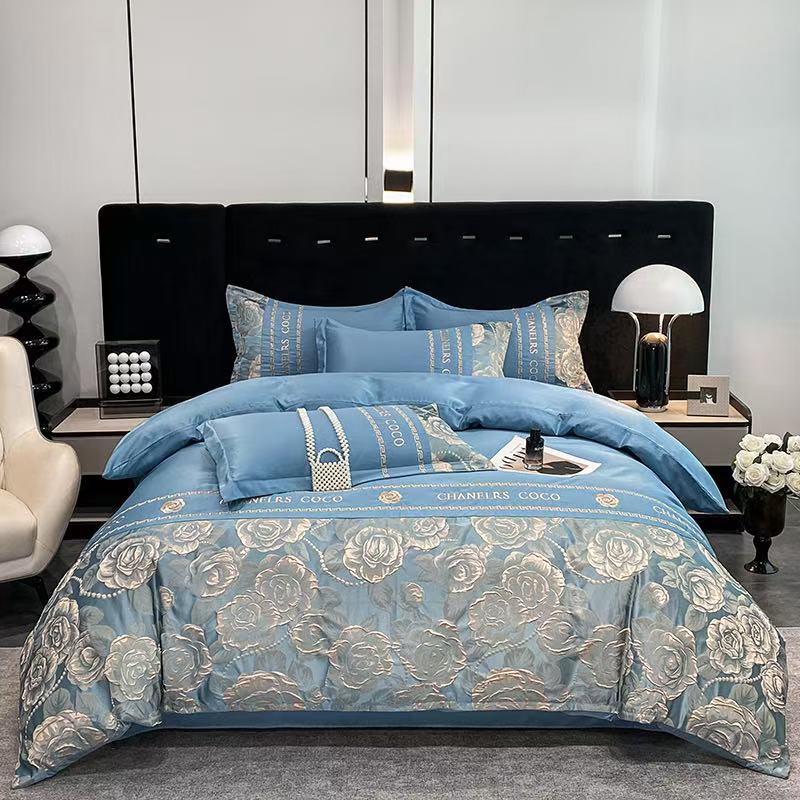
What is included in a four-piece bedding set?
A common configuration is one duvet cover, one sheet and two pillowcases, but a buyer may instead request a different sheet type, pillowcase count or market-specific combination. Never infer the contents from the name or image. List every component, its finished dimensions and its quantity per set in the purchase specification.
Build a quote-ready set specification
| Decision | What to confirm |
|---|---|
| Set configuration | Component names and count, flat or fitted sheet, pillowcase style, closure type. |
| Dimensions | Finished length and width for each component, tolerance, and fitted-sheet pocket depth where relevant. |
| Material | Fibre content, construction, weight or count where appropriate, handfeel and care requirements. |
| Appearance | Colour standard, print placement, panel layout, trims and any decorative finish. |
| Retail and export pack | Fold, label, barcode, unit bag or box, master-carton quantity and marks. |
| Acceptance | Approved sample, measurements, workmanship criteria, inspection plan and test requests. |
The set configuration guide, size guide and specification sheet guide help turn these decisions into a single supplier brief.
Compare material and construction, not just the set name
Ask for the exact fibre composition and fabric construction for the proposed style. “Cotton” and “ice silk” may be used as category or catalogue wording; they do not by themselves establish a final laboratory composition or performance value. Compare the handfeel and appearance of actual samples, then record the approved material, finish and care-label wording.
Check practical construction points: duvet-cover opening and fastener, seam alignment, pillowcase opening, fitted-sheet elastic, skirt drop if included, visible print positioning and consistency across sizes. The right choice depends on the destination market and sales channel, not a generic “best fabric” claim. Use the fabric guide to prepare material questions.
Use published styles as visual references
The Blue Floral Ice Silk 4 Piece Bedding Set and Red Lace Bed Skirt Cotton 4 Piece Bedding Set have individual sourcing pages. Their photographs show style direction; dimensions, final set contents, measurable fabric values, MOQ and lead time still require a current specification and quotation. Browse the full category when selecting a design direction.
Approve one sample against one document version
Before bulk release, compare the physical set with the dated specification. Measure every component, review colour and workmanship in suitable light, verify labels and barcode data, then approve the retail pack and carton with the product. Record changes against the same SKU and version so an old sample or artwork file cannot be mistaken for the final reference. The sample approval checklist provides a fuller review sequence.
What should a wholesale buyer ask in the first message?
- Can you quote this exact component list and size table?
- Which material and construction does the quote assume?
- What sample will be supplied for fabric, colour and workmanship approval?
- Which labels, packaging and carton details are included?
- What quantity by size and colour is needed to confirm MOQ and timing?
A comparable answer requires the same brief for each supplier. If a field is not yet decided, mark it as open instead of allowing different suppliers to make different assumptions.
Request a set-specific review
Send your component list, size table, material direction, target quantity and packaging brief.
Prepare an inquiry