How to Source Quilted Bedding Sets for Private Label
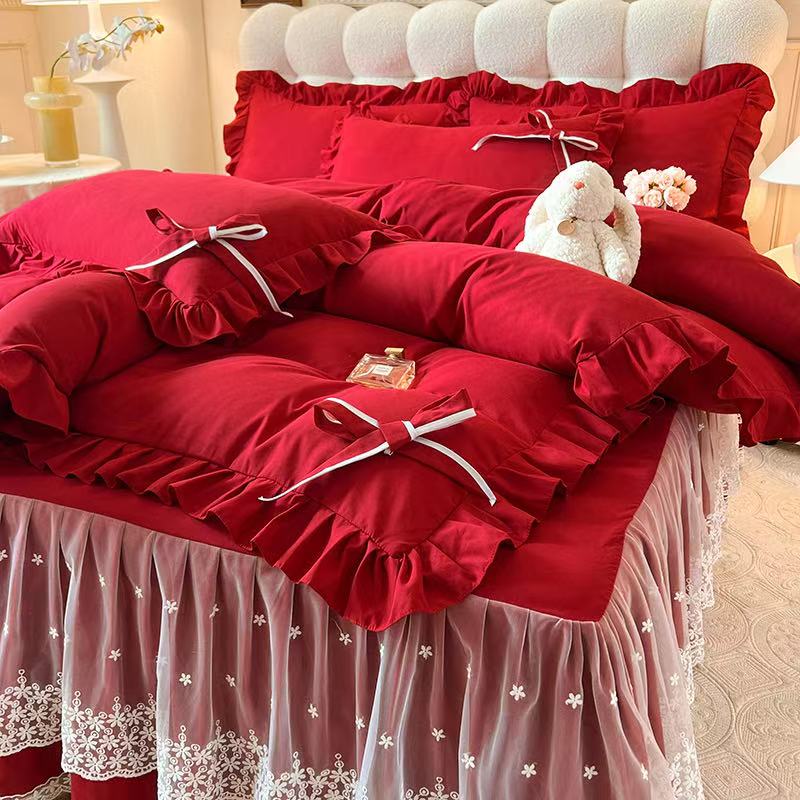
To source a private-label quilted bedding set, approve one specification that connects the commercial offer to the physical product: component list, finished sizes, face and reverse fabrics, filling, quilting pattern, edge finish, labels, packaging and acceptance tolerances. A reference image can guide appearance, but the quotation, sample and inspection should all use the same written specification.
Private-Label Quilted Bedding Sourcing Checklist
| Decision area | What the buyer should define | Approval evidence |
|---|---|---|
| Set construction | Every included component, quantity and finished size | SKU bill of materials and measurement sheet |
| Outer fabrics | Composition, construction, weight, colour and face/reverse use | Approved swatches and colour reference |
| Filling | Material, target weight, distribution and permitted tolerance | Filled sample and recorded specification |
| Quilting | Pattern artwork, repeat scale, spacing, placement and thread colour | Marked drawing and approved full-size sample |
| Finishing | Binding, flange, piping, closure, corners and loose-thread standard | Detail photographs with written comments |
| Brand presentation | Main label, care label, insert, barcode and retail pack | Approved artwork and packed sample |
| Bulk control | Inspection stage, sampling plan and pass/fail criteria | Signed specification and inspection checklist |
Start With the Market and SKU Plan
Define where and how the set will be sold before choosing materials. A value retail set, an e-commerce programme and a decorative department-store range may require different pack sizes, presentation and construction priorities. Give the supplier the destination market, channel, target retail position, launch window and expected quantity. Identify whether the set is intended for year-round use, decorative layering or a seasonal promotion.
Build a SKU matrix with colour, size and component count. Write exact centimetre dimensions for every component rather than relying on labels such as queen or king, because those names vary by market and retailer. If several countries share one collection, keep the visual design common while separating the dimensions, labels and packaging data by SKU.
- List order quantity and price break by colour and size.
- Identify which components are quilted and which use plain fabric.
- State the destination-language, fibre-content and care-label requirements.
- Record the buyer who can approve commercial, design and quality decisions.
Specify Fabric and Filling Separately
A quilted set combines several layers, so “soft polyester quilt” is not a complete material specification. Record the face fabric, reverse fabric and filling as separate items. For each textile, state the fibre composition, construction, target weight or other agreed measurable reference, colour standard and intended location in the product.
The filling specification should state the material, target weight and tolerance for the finished component. Ask how filling will be spread before quilting and how the supplier controls thin areas, bunching or migration. If handfeel and loft are central to the offer, approve them on a full finished sample because a loose filling swatch cannot show the effect of quilting density and compression.
- Keep approved face and reverse swatches under controlled lighting references.
- Define whether pre-production testing is required for colourfastness, dimensional change or other destination-market needs.
- Record whether filling weight is specified per square metre, per component or by another agreed method.
- Use the same units and tolerance convention in the quotation, sample record and inspection sheet.
Turn the Quilt Pattern Into Production Data
The quilt pattern affects appearance, filling stability, sewing time and alignment. Supply artwork or a marked photograph that shows the repeat, orientation and placement. State the stitch spacing, thread colour, start and stop treatment, and whether the pattern must centre on the bed. For bordered designs, define the distance between the quilt field, edge treatment and finished seam.
Review the pattern at full product scale. A motif that looks balanced on a small strike-off may become too dense, too sparse or visibly off-centre on a large bedspread. The approval sample should show corners, joins and the full edge finish, including any binding, piping, flange or decorative panel.
Lock the Component Bill of Materials
Private-label sets often fail at handover when the quotation names a set but does not list its parts. Create a component-level bill of materials covering the quilt or bedspread, pillow shams, cushions, sheets or other included pieces. Give each component its own finished size, fabric assignment, quilting instruction, closure, trim and label position.
For pillow shams, specify the finished body size separately from flange width and closure overlap. For bedspreads, clarify drop and corner treatment. For reversible products, state which face appears in retail photography and how labels should be positioned so the reverse side remains usable.
Approve a Complete Golden Sample
Approve the complete set in the same form the customer will receive. Compare it with the written bill of materials and measurement sheet, then record accepted comments with dated photographs. Review shade, handfeel, filling distribution, quilt alignment, stitch security, edge finish, symmetry, labels and component count. Place the set on the intended bed size to judge drape and pattern scale.
Packaging belongs in the same approval. Fold and pack the complete set, then confirm whether compression changes the loft or creates presentation marks. Check barcode position, inserts, warning text, bag or box dimensions, master-carton quantity and carton marks. The approved packed sample becomes a practical reference for production and final inspection.
Set Bulk Quality-Control Checkpoints
Translate sample comments into inspection criteria before production begins. Incoming controls can cover fabric shade, width, filling and accessories. In-line checks can focus on pattern alignment, puckering, skipped stitches, unsecured thread ends and uneven filling. Final inspection should verify measurements, workmanship, component count, labels, unit packing and carton information against the signed specification.
Define how defects will be classified and who decides corrective action. If a recurring issue appears during sewing, correcting the process before packing is more useful than sorting finished cartons later. Link the inspection checklist to the same revision number used for the approved sample so outdated instructions are not mixed into bulk production. Buyers can review the broader quality-control workflow and bedding specification sheet before issuing an RFQ.
Prepare a Comparable RFQ
Send each supplier the same specification, SKU quantity, delivery target, destination, testing requirement and packaging brief. Ask the quotation to separate product assumptions, sample timing, bulk lead time, packaging costs and trade terms. A price comparison is meaningful only when fabric, filling, component count, quilting and packing are equivalent.
For product context, compare the construction choices with the comforter insert category and the comforter insert sourcing guide. Private-label buyers can then use the OEM service workflow to organise specification review, sampling and production approval.
Frequently Asked Questions
Which specifications should a private-label quilted bedding RFQ include?
Include the component list, finished dimensions, face and reverse fabrics, filling type and target weight, quilting pattern and spacing, binding or edge finish, colour references, labels, unit packing, carton requirements, quantities by SKU and required testing.
Can a reference photo replace an approved quilted bedding specification?
No. A photo can communicate visual direction, but the buyer and supplier still need written dimensions, materials, filling, quilting construction, tolerances, labels and packaging requirements.
What should buyers check on a quilted bedding approval sample?
Check the complete set against the bill of materials, including dimensions, shade, handfeel, filling distribution, quilt-pattern alignment, stitch security, edge finish, labels, component count and packed presentation.
When should retail packaging be approved?
Approve packaging with the final product sample before bulk production so that fold size, compression, barcode position, presentation, protection and master-carton fit can be reviewed together.
Develop Your Quilted Bedding Programme
NEXTHOME TEX supports wholesale and private-label bedding development. Share the market, SKU matrix, dimensions, material direction, quilt artwork, quantity and delivery target to begin a focused specification and sample review. Explore bedding collections or review OEM options.