Milk Velvet Bedding Sets: A Wholesale Buyer’s Guide to Fabric, Construction and Seasonal Planning
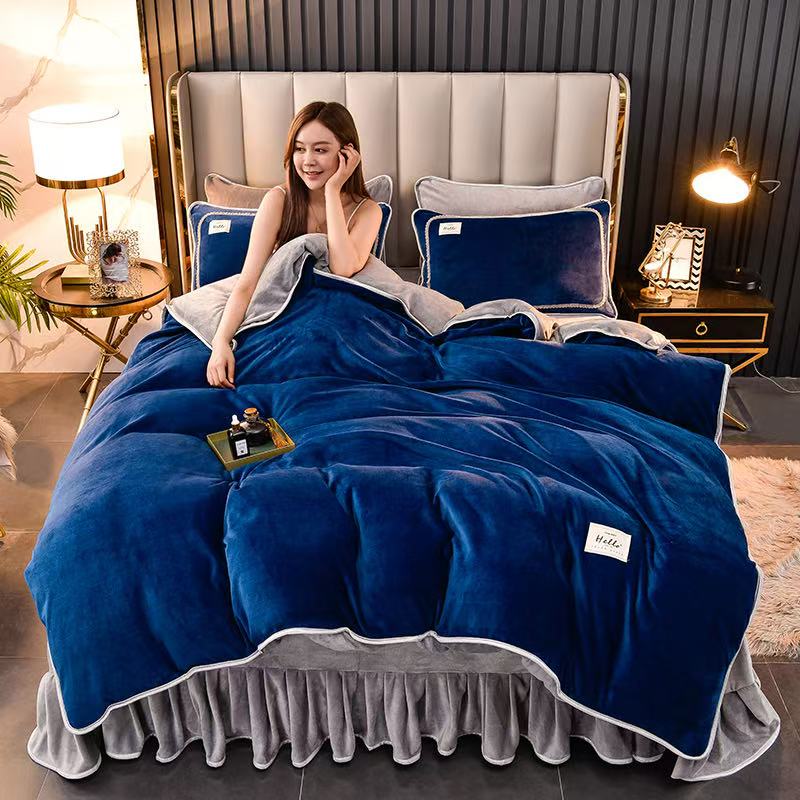
Milk velvet bedding sets are plush, warm-touch products used in autumn and winter assortments. Wholesale buyers should specify the fabric construction, weight, pile appearance, set components, dimensions, decorative details, colour direction, labels and packing. Because pile changes how colour and sheen appear, physical sample approval is especially important before bulk production.
The term “milk velvet” is used commercially for a soft plush fabric category and may not define one universal fibre composition or construction. Buyers should confirm the actual material specification for each programme instead of assuming that all products sold under the name are identical.
What Is Milk Velvet Bedding?
Milk velvet bedding uses a soft, raised-pile fabric that creates a smooth or plush handfeel and a visually rich surface. It is often selected for cold-season duvet covers, sheets, pillowcases and skirted bedding sets. The final performance depends on composition, knitting or weaving direction, pile, fabric weight, finishing and garment construction.
For product comparison, ask suppliers to state the measurable fabric details and provide a completed sample. A marketing name alone cannot show warmth, durability, drape or surface quality.
Define the Target Customer and Season
Begin with the market position. A lightweight, easy-care online set may need a different fabric and pack from a decorative premium set displayed in a store.
Include:
- Destination country or region
- Autumn, winter or transitional selling season
- Retail, e-commerce, wholesale or project channel
- Entry, mid-market or premium price position
- Target customer preference for weight and warmth
- Planned launch date and delivery window
Seasonal timing matters because sampling, colour approval, packaging production, bulk manufacturing and shipping all happen before the selling period. Work backwards from the required warehouse date and allow time for corrections.
Compare Fabric by Specification, Not Only Touch
A soft swatch is useful, but it does not fully represent a sewn bedding set. Ask for composition, construction, weight direction, pile characteristics, width, colour process and care information.
Evaluate:
- Surface softness and consistency
- Pile height and density direction
- Sheen under different lighting
- Drape and body
- Stretch and recovery
- Reverse-side appearance
- Risk of visible pressure or fold marks
- Suitability for print, embroidery, quilting, lace or ruffles
Review several colours because the same pile can appear different in dark, saturated and pale shades.
Why Does Milk Velvet Change Colour When Brushed?
Raised pile reflects light differently depending on its direction. Brushing the surface can make one area appear lighter or darker even when the dye colour is consistent. This is a normal visual characteristic of many pile fabrics, but the buyer should decide what level of variation is acceptable for the intended product.
During approval, view the sample:
- From the head and foot of the bed
- In daylight and intended retail lighting
- With the pile brushed in different directions
- After folding and unpacking
- Next to coordinating trims and packaging colours
Agree on pile direction for cut panels so the complete set has a consistent visual orientation.
Select the Set Configuration
A “four-piece set” does not mean the same components in every market. Define each item and quantity.
Possible components include:
- Duvet cover
- Flat sheet
- Fitted sheet
- Bed-skirt sheet
- Two pillowcases
- Decorative shams
Send exact finished dimensions for each component. For skirted sets, specify platform dimensions, drop length, gathers or pleats and the placement of decorative panels. For duvet covers, define the opening and closure. For pillowcases, define flap, zipper or other closure details.
Plan Decorative Construction
Milk velvet collections often use quilting, lace, embroidery, piping, ruffles or contrast panels. These details shape the retail position but also affect sewing, handling and packing.
The brief should include drawings or marked reference photos for:
- Decorative placement and dimensions
- Lace or trim width and colour
- Ruffle fullness and finished width
- Embroidery area, stitch direction and artwork
- Quilting pattern and spacing
- Piping size and insertion seam
- Closure location
- Front and reverse orientation
Inspect symmetry and alignment with the product placed on a bed. Decorative details that appear straight on a cutting table may sit differently after filling or draping.
Build a Commercial Colour Range
A focused colour range is easier to control and merchandise than an oversized first order. Buyers can combine core neutrals with selected seasonal colours, then expand based on sales performance.
For each colour:
- Provide a physical or standardized colour reference where possible
- Review colour on the actual pile fabric
- Confirm matching or contrast trims
- Approve labels and packaging next to the product
- Assign a unique SKU and barcode
Do not approve colour only from a phone photograph. Cameras, screens, lighting and pile direction can all change appearance.
Review Workmanship on Plush Fabric
Pile fabric can hide some stitches while making pressure marks or uneven seams more visible. Sample inspection should include both close-up workmanship and the complete bed presentation.
Check:
- Seam straightness and puckering
- Trapped pile along seams
- Corner shape and component symmetry
- Closure operation
- Loose threads or skipped stitches
- Surface marks, shading and contamination
- Decorative alignment
- Measurement and component count
Brush or gently lift pile near seams to see whether the finish is clean. Confirm the accepted surface appearance after normal packing and handling.
Choose Packaging for Loft and Presentation
Milk velvet sets can be bulky. Packaging must protect the pile, keep components together and support the desired retail presentation.
Common directions include:
- Clear or printed bags for efficient handling
- Zippered retail bags for a reusable presentation
- Boxes for premium or gift positioning
- Moderate compression when recovery is acceptable
Run a complete packing trial. Review fold marks, pile recovery, colour visibility, handle strength, barcode position, unit dimensions and master-carton fit. If compression is used, record how the set looks after opening and resting.
Seasonal Production Planning
Start with the required arrival date, not only the order date. A practical schedule needs room for specification, sample development, colour and artwork approval, material preparation, production, inspection and freight.
Use this sequence:
- Confirm market, assortment and target arrival.
- Freeze sizes, components and fabric direction.
- Approve colour references and decorative artwork.
- Review the complete product sample.
- Approve labels, barcode and packed presentation.
- Align bulk inspection with the approved references.
- Confirm export packing and shipment documents.
Lead time depends on design complexity, material status, quantity, packaging and production schedule. Request a project-specific timeline rather than relying on a generic promise.
What to Send for a Milk Velvet Bedding Quotation
Provide:
- Destination market and selling season
- Set components and exact dimensions
- Fabric composition, construction, weight and handfeel direction
- Colour references and quantity by colour
- Print, quilting, lace, embroidery or ruffle details
- Closure and seam requirements
- Brand labels, care labels and barcodes
- Unit packaging and master-carton direction
- Estimated order quantity
- Sample, inspection and delivery requirements
If you have a reference product, identify which features must be matched and which can be adapted. Avoid asking a supplier to copy protected branding or original artwork belonging to another brand.
Frequently Asked Questions
Is milk velvet made from milk fibre?
The commercial name does not guarantee a specific fibre composition. Ask for the actual material specification, labelling information and any documentation required for your market before making a composition claim.
Is milk velvet bedding suitable only for winter?
It is mainly used for warm-touch cold-season collections, but suitability depends on fabric weight, construction, climate and customer preference. Define the intended season and approve the full sample.
Why do two milk velvet samples feel different?
They may differ in composition, pile, density, weight, finishing or reverse construction. Compare measurable specifications alongside handfeel rather than using the product name as the only reference.
Can milk velvet bedding be compression packed?
It can be considered, but the pile, folds and overall presentation must recover acceptably. Approve a packing and recovery trial using the finished set.
What is the best first colour assortment?
There is no universal assortment. Use customer and channel data to select a controlled range of core and seasonal colours, then order by SKU. Physical colour approval is essential for pile fabric.
Develop a Seasonal Milk Velvet Collection
NEXTHOME TEX manufactures milk velvet four-piece bedding sets for wholesale, retail, e-commerce and private-label programmes. Share your season, market, component list, dimensions, colour direction, quantity and packaging brief for review. Explore milk velvet bedding options or review the OEM development process.